
CA Final
Connecting…@taani
where I can find the past papers rtps mtps in this app
9:36 pm
@camayankkothari
@taani its coming tomorrow
6:41 am
in New App Update
6:41 am
@taani
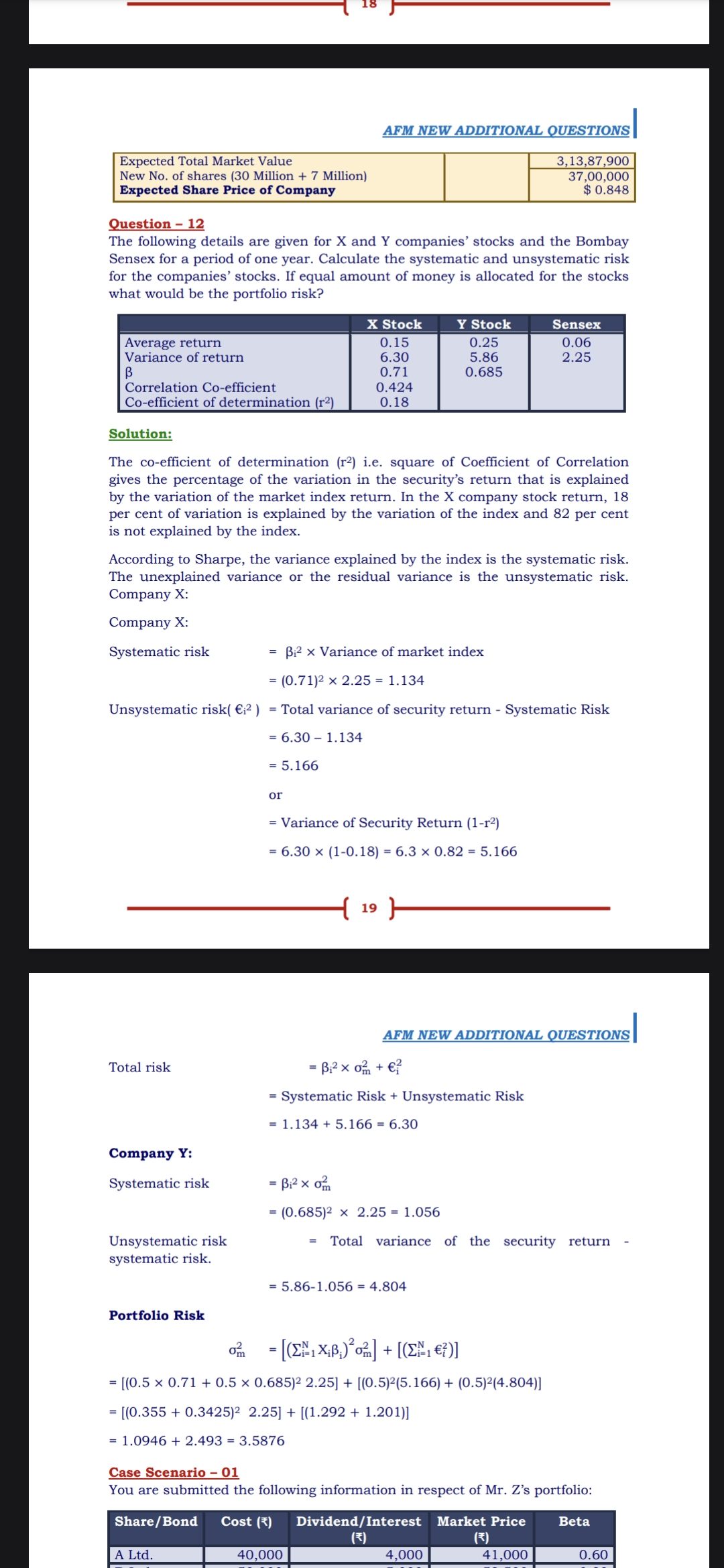
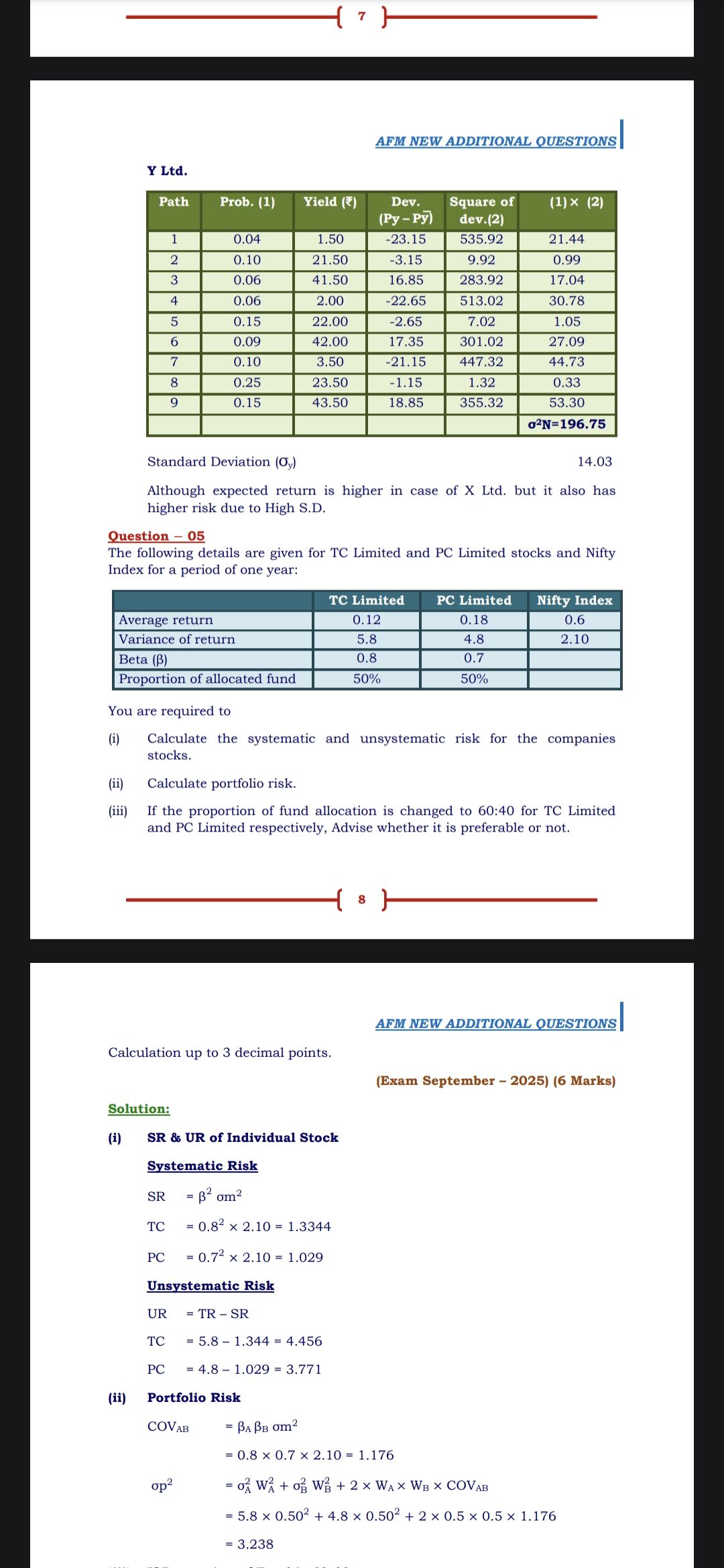
What is the difference between the two ques that they calculate with different method for Portfolio risk
5:02 pm
@Conferenza Admin
@taaniWhat is the difference between the two ques that they calculate with different method for Portfolio risk
ok so looking at these two questions you shared, i can see why it feels confusing. let me break down the real difference because both are portfolio risk but the setup is different.
in question 12, you have two stocks X and Y, and you're told equal money is invested in both. so its a simple two-stock portfolio. the formula they use is straightforward:
portfolio variance = (Wx)² × σx² + (Wy)² × σy² + 2 × Wx × Wy × Correlation × σx × σy
basically weight each stock, square it, multiply by its variance, add them, and then add the correlation adjustment. that's it. clean and direct.
now in question 5, the setup is also two stocks TC and PC with 50-50 allocation initially. but look at what they actually calculate for portfolio variance:
σp² = (βA × βB × σm²) + [(Σεi²)]
see the difference? this one is built using the correlation between the two stocks expressed through their betas and the market variance, PLUS the unsystematic risks added. its like theyre breaking down the risk into what moves together through the market and what moves independently.
think of it like this: imagine Virat Kohli and Rohit Sharma are batting together. in question 12, you just look at how their individual styles and how correlated their performances are directly. in question 5, youre saying okay, how much do they move together because of external factors like the pitch and weather (systematic via betas), and how much is their own individual strength (unsystematic via epsilon). the second approach is more granular.
the reason for the difference? question 12 gives you correlation coefficient directly. question 5 gives you individual stock betas and market data instead, so you have to reconstruct the relationship through the beta framework. both reach portfolio risk but they start from different information.
does that click for you?
9:10 am
@taani
if we calculate with same formula either of the formula ?
5:43 pm
I m unable to understand that why different way of calculating. sorry sir nhi smjh aaya
5:45 pm
sir aapne or almost every question had the formula in it.. why question 12 calculate in a simple weight & correlation formula
5:46 pm
@Conferenza Admin
@taaniif we calculate with same formula either of the formula ?
I m unable to understand that why different way of calculating
no need to say sorry yaar, this is actually a very fair question and shows you're thinking carefully. let me clear this up properly.
see the thing is, both formulas are actually the same formula — but they look different because of how the question is set up.
in question 12, when you have just two assets with equal weights (50-50), the standard portfolio risk formula simplifies beautifully. instead of writing out the full matrix style calculation, you can use the shorter form: σp = √(w₁²σ₁² + w₂²σ₂² + 2w₁w₂σ₁σ₂ρ)
but here's the key thing — in other questions, especially when you have three or more assets, or unequal weights, or when the question already gives you a variance-covariance matrix, you CANNOT simplify like that. you have to use the full expanded formula or matrix method because the relationship between the assets is more complex.
think of it like this. imagine Virat Kohli is batting in a test match. sometimes the bowler is predictable — fast and straight — so Virat can use a simple attacking shot. but when the bowler is mixing pace, spin, and angles, Virat cannot use the same simple shot. he has to adjust his technique for every ball. same player, same goal (to score), but the method changes based on what's coming at him.
so in exam, the formula you use depends on what the question gives you. if it's simple two-asset equal weight, the weight-correlation form works fast. if it's complex with a covariance matrix already given, use that directly. the math inside is identical, just written differently.
does that land for you now?
5:52 pm
@taani
yes sir understood now
Thankyou so much sir 🙏
10:57 pm
@camayankkothari
@gowshik
Sir do you have additional questions to latest edition from compiler 5.0
12:49 pm
@Conferenza Admin
@gowshikSir do you have additional questions to latest edition from compiler 5.0
hey gowshik, i appreciate the question but i'm not really the person to check what's in the latest compiler edition or which specific practice sets are out there. that's more of a book/material availability thing.
but here's what i'd suggest — if you're looking for extra questions on a particular topic from your course, just let me know what chapter or concept you're stuck on or want more practice in, and i can walk you through the approach or help you solve whatever you have. that's where i can actually add value.
what topic are you thinking about?
12:56 pm
@taani
@camayankkothari sir pls share the additional ques pdf after 5.1 additional ques for April 25
1:58 pm
@Conferenza Admin
@taani@camayankkothari sir pls share the additional ques pdf after 5.1 additional ques for April 25
hey taani, i think there's a bit of a mix-up here — i'm not the person who manages or shares study materials and PDFs. that's something the Conferenza team handles directly through the platform or your course materials.
what i'd suggest is reach out to the main team or check your dashboard/email — they usually send out updates and additional question sets there. if you've already enrolled for April 25, the materials should be coming your way soon, or you can ask them directly when the next set drops.
in the meantime, if you get stuck on any actual concept or sum from whatever materials you have, just paste it here and we'll sort it out together. that's what i'm here for.
2:04 pm
@ancy
can u share the foundation mathematics of finance equations
4:27 pm
@Conferenza Admin
@ancycan u share the foundation mathematics of finance equations
hey ancy, i don't have a way to share PDFs or files directly through here — that's handled by the Conferenza team through your course portal or materials.
but here's what i can do: if you tell me which specific equations or topics from foundation mathematics of finance are giving you trouble — like time value of money formulas, present value, future value, annuity calculations, or anything else — i can walk you through them properly, explain the logic, and show you how to use them in sums. that's actually way more useful than just seeing a list of formulas anyway, because then it sticks.
so just drop a message with what's confusing you, and we'll sort it out together.
4:32 pm
@taani
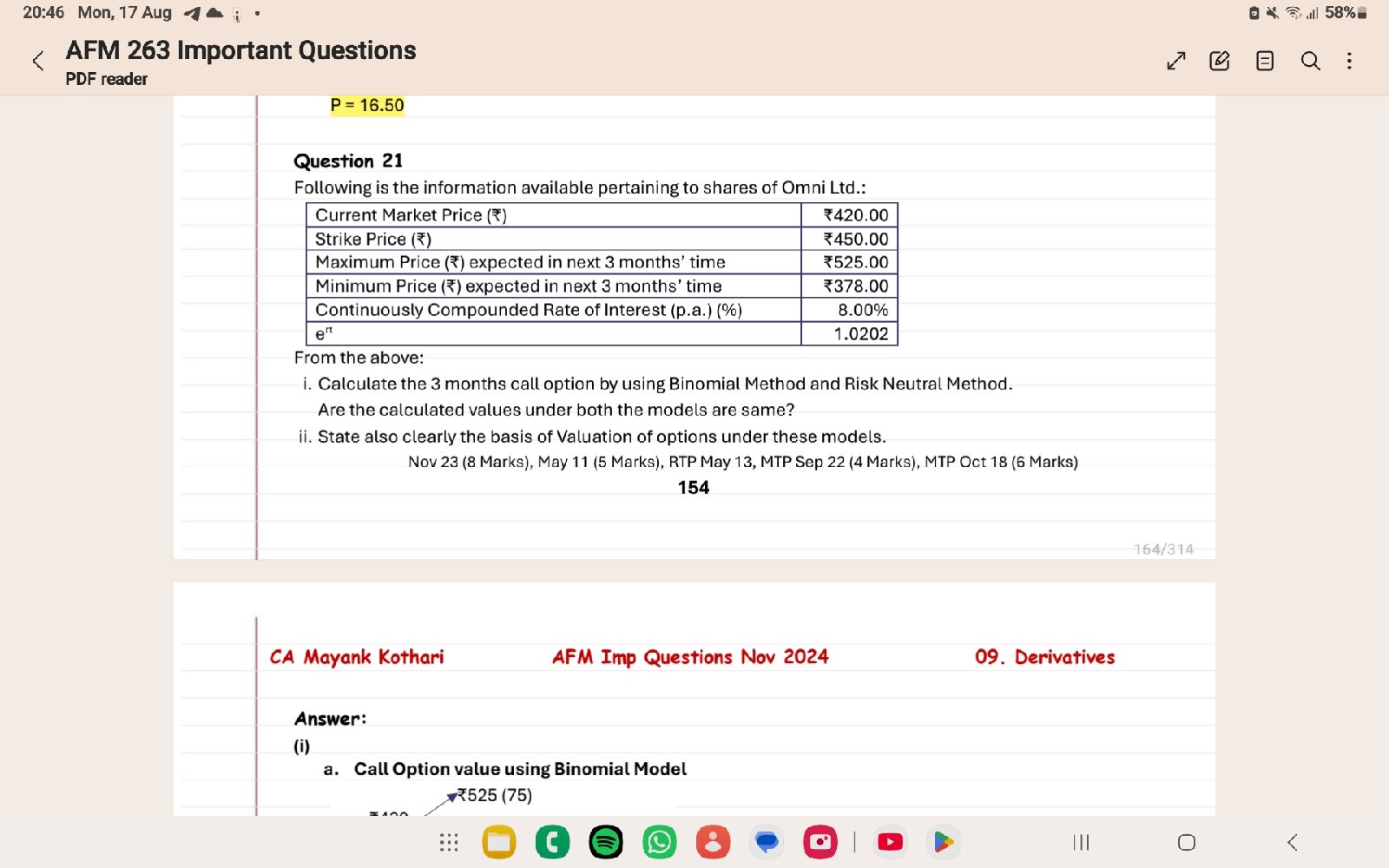
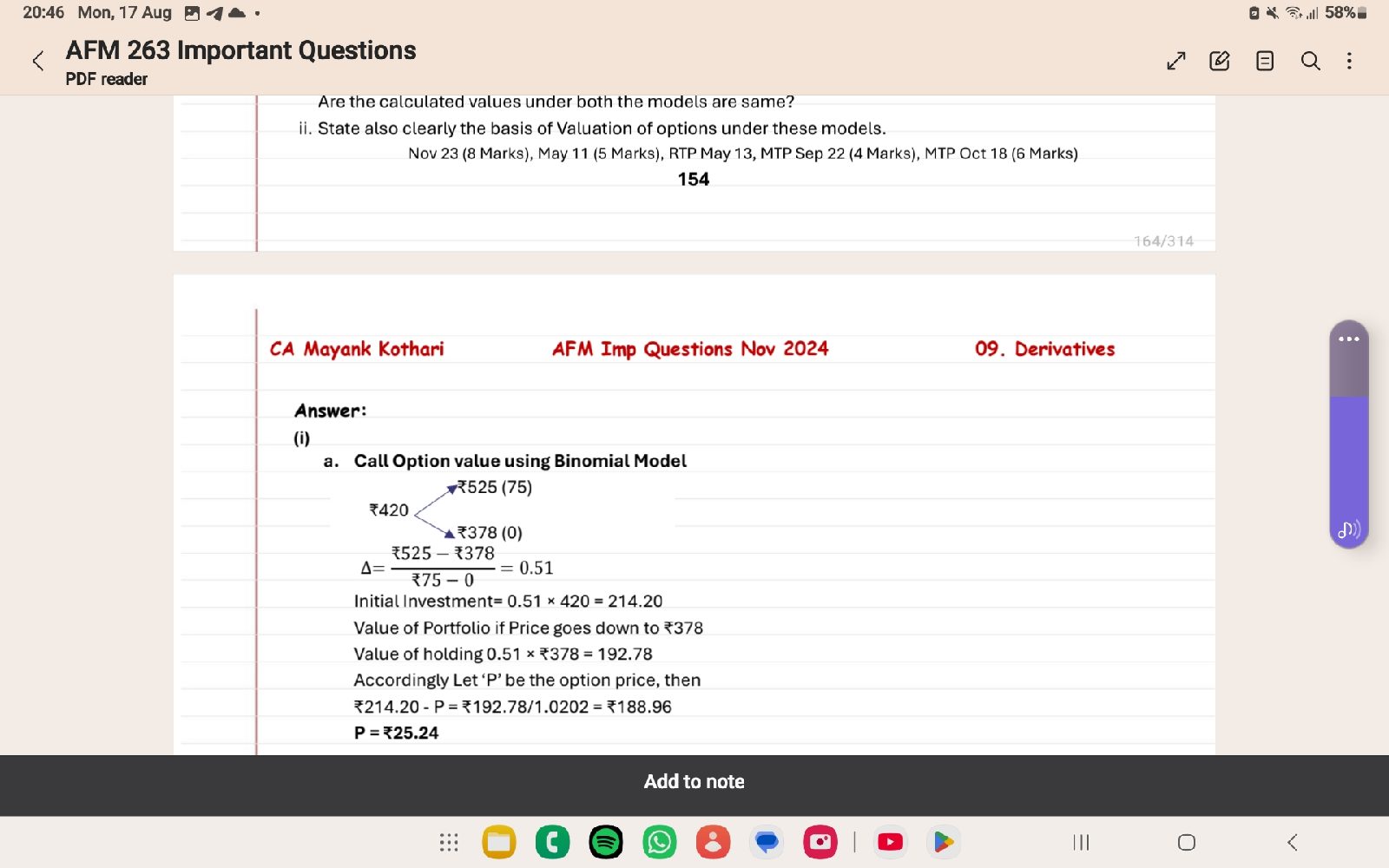
why Portfolio replicating model , Hedge ratio has been used rather than Binomial model
9:45 pm
@Conferenza Admin
@taaniwhy Portfolio replicating model , Hedge ratio has been used rather than Binomial model
okay so this is a really good question and i can see from the answer sheet you've shared that both methods are actually being used here, so let me clarify what's happening.
in the binomial model answer they showed, they calculated the call option value as ₹25.24. but here's the thing — the binomial method works best when you have a clear up and down movement in price over one period. it's simple, visual, and works nicely for one or two steps.
now the portfolio replicating model (also called the hedge ratio method) is the foundation behind the binomial approach. what it does is ask: "if i buy some shares and borrow some cash, can i create a portfolio that exactly mimics the payoff of the option?" when you can do that, the cost of that replicating portfolio must equal the option price — otherwise there's arbitrage.
here's why the hedge ratio approach is preferred in exam answers:
the hedge ratio (delta) tells you the true sensitivity. it shows how many shares you need to buy to replicate one option contract. in this case, delta came out to 0.51, which means for every call option, you need to hold 0.51 shares. this is not just a number — it's the real economic relationship.
think of it like MS Dhoni choosing his batting position. dhoni doesn't just look at one match; he understands the pattern and the core principle of when he should bat. similarly, the hedge ratio approach doesn't just give you a number for one scenario — it gives you the principle of replication that works across different price movements.
the binomial tree shows the outcomes at different prices (₹525 and ₹378 in your question), but the hedge ratio approach shows you why the option is worth what it is — because that's what it costs to replicate it in the market today.
in exam answers, they often start with the replicating portfolio method to establish the logic, then may use binomial for visualization. both give the same answer if done right, but the hedge ratio method is more fundamental and shows deeper understanding. that's probably why it gets weightage in answers.
does this click now? any part you want me to walk through more slowly?
9:52 pm
@taani
but here question says use Binomial model.. if we use Binomial model will it be incorrect?
10:03 pm
@Conferenza Admin
@taanibut here question says use Binomial model.. if we use Binomial model will it be incorrect?
ah no no, using binomial model won't be incorrect at all. let me clear this up because i think there's a bit of confusion here.
see, when a question says "use binomial model", you should absolutely use binomial model. the binomial model will give you the correct answer for that question. what i was trying to say earlier was just that sometimes the same problem can be solved using multiple approaches — binomial, portfolio replication, hedge ratio method — and they should all give you the same final answer if done correctly.
think of it like this: imagine you're MS Dhoni trying to reach the crease from the boundary. you can run straight, or you can run a curved path, or you can take help of the field. all three paths reach the same crease, right? but if the coach says "run straight", you run straight. you don't suddenly start running curves just because curves are also valid.
similarly, if your question explicitly asks for binomial model, stick with binomial model. calculate the up and down moves, find the risk-neutral probability, discount back to today, and you'll get your answer. that's the method they want to see, and it's correct.
the other methods like replication or hedge ratio are also valid approaches for the same type of problem, but they're alternate methods — use them only if the question asks for them, or if you're double-checking your answer.
so the short answer: no, binomial model won't be incorrect. use it as instructed and you're good. which specific problem are you working on? if you share the question i can walk you through the actual calculation if needed.
10:10 pm
@taani
ok
10:34 pm
@yuvi
i need SPOM mcq
9:42 pm
@camayankkothari
yes will upload that soon
4:39 pm
@nitu
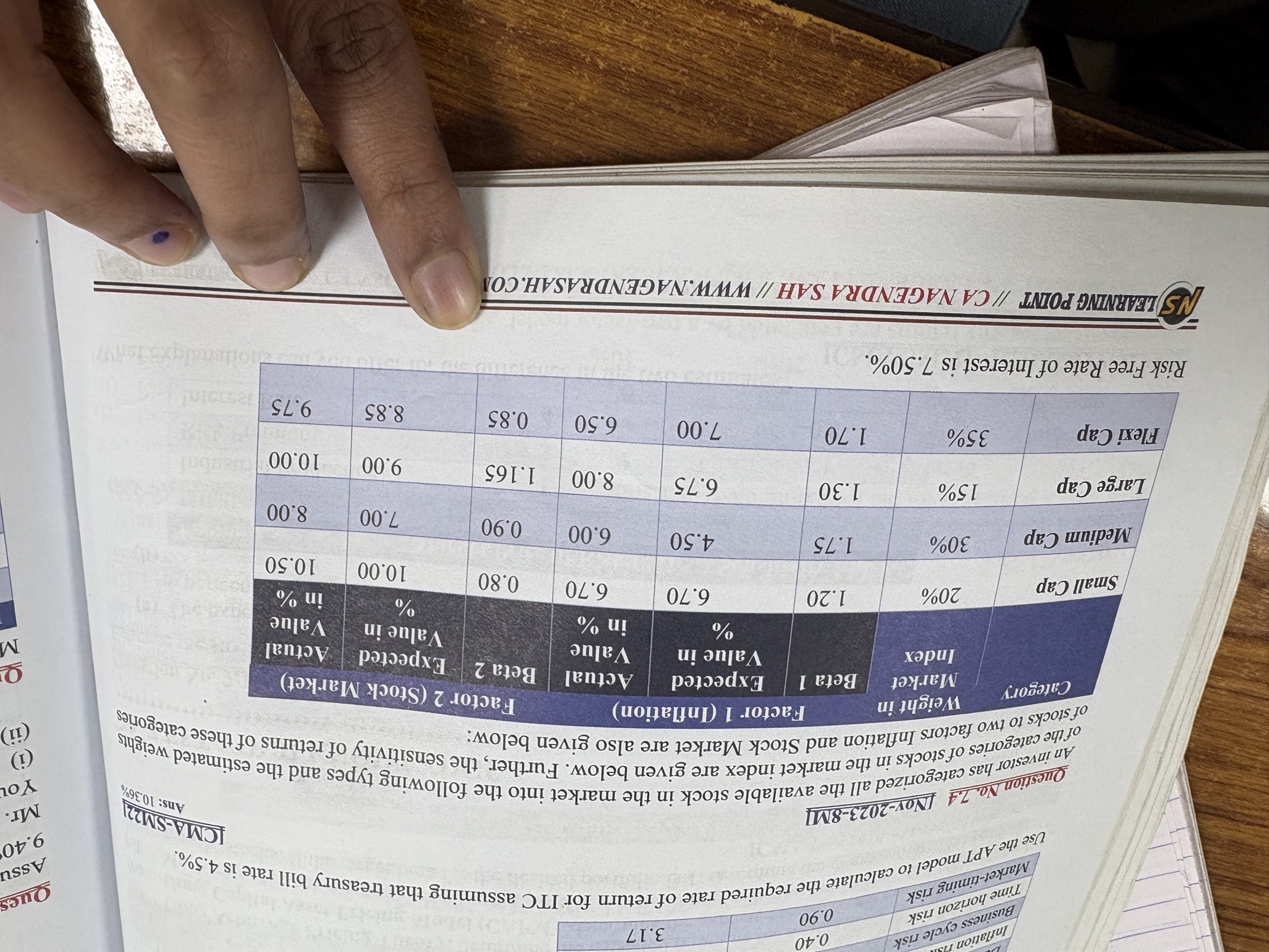
7:59 pm
solve kr do koi
8:00 pm
@ishu5671
want mcq on accounts for closing tranfer entries opening entry
9:09 am
@harsh
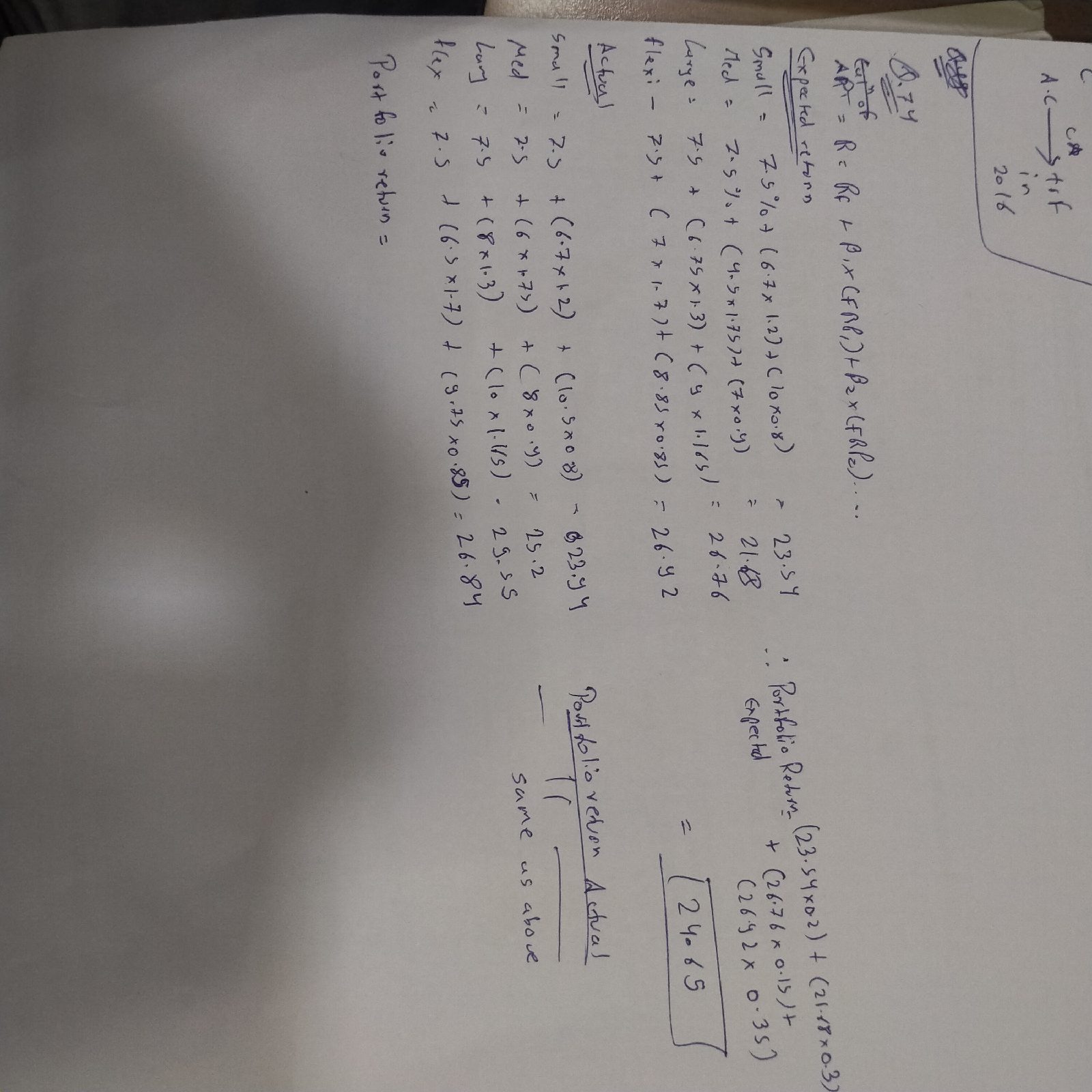
2:23 pm
@krishna123ok
thank you sir for free chat here. can we ask every subject doubt here ??
1:05 pm
@darshan
sir , marathon revision in english 🙏
6:25 pm
@chandu
@camayankkothari
Tq so much sir
1:26 pm
@taani
@camayankkothari sir, I need your help in knowing the difference between the questions related to cancellation charges Calculations....why 40 has total of all and in 41 only the contract vs the spot rate


edited · 6:51 pm
@krima
sir past 3 attempts of CA FINAL AFM have been very tough so need you help for last 1.5 days revision can you pls give us some last day imp revision ques as per the pattern of last exams some list of questions or imp questions from compiler
7:34 pm
@camayankkothari
@taani Watch Forex Revision Video for this carefully on my channel for this
https://youtu.be/KzXjSwBmPbY?si=iyD1H6ukHy0M1EY5
10:09 pm
@krima
will plan
10:09 pm
@ajaymehta
Is this book based on the new Income Tax Act, 2025?

11:32 pm
@caislife
good afternoon Mr. kothari. you are an amazing teacher and I feel must be a great human being too. why have you stopped releasing you tube videos for AFM?
3:46 pm
@pratik
yes.
i used to refer bus FM videos in my inter
he's really good
4:24 pm
@caislife
I always failed group 1 due to AFM (earlier SFM). I took 3-4 classes of Mr. kothari n really feeling confident in this subject. really wish if he releases latest videos.
10:10 pm
@krima
yess sir you have been an amazing teacher!!
5:33 pm
@yash
hello sir , please tell us something wrt nov 26
7:01 pm
@caislife
happy teachers day mr. kothari. your videos gave me ray of hope to trust myself for AFM.
4:41 pm
@krimali
Happy teachers day sir !
after years also I connect to your methods and concepts. You have been an amazing teacher and human!
4:48 pm
@prerna
sir how can I purchase classes of AFM ?
8:42 pm
@shreya
Hi sir
this is with regard to mcqs that are available on this app
To be honest, solving those mcqs are a new reality check for me and they are so well framed. The answers,explanation to the solutions,highlighted pointers in the explanation-so good and well drafted.
My only request is that after we solve a particular mcq test and since it needs atleat 75% to clear that test, if the final answers and explanation is available for reading just as a click will be very much helpful rather than to attempt the same test again to know or revise the answers. Requesting you to provide for the same.
If that option is made available it would be really good so that in 1.5 days the important and tricky areas can be revised with just that attempted mcqs
Hope it will be helpful for others too!
Thank you
All the best for other students
6:00 am
@binod
class 1 math
10:23 pm
need cbse class 1 all subject questions bank
10:23 pm
@rudra
cma foundation practice ouestion of all subject
11:48 pm
@ashish
when will the books be delivered how can we track the shipment
1:30 pm
@devyani
How I know where is my idt book on track
5:02 pm
@bittu
Track the same on internet
5:14 pm
@darshan
once dispatched u wl get tracking number
8:47 pm
@alwaysramcharan
i want lo learn a mec cource so i want a basic mathematics book for the foundation
8:00 pm
@ramesh
is FR digest provided in 2 volume in Akash kandoi FR fastrack
6:23 pm
@chandu
Sir, when u release impt questions list for nov 26 exam approx days?
3:40 pm
@nafisa
hi sir , in this mcq the answer shows 2.74 lakhs , but it be 27400
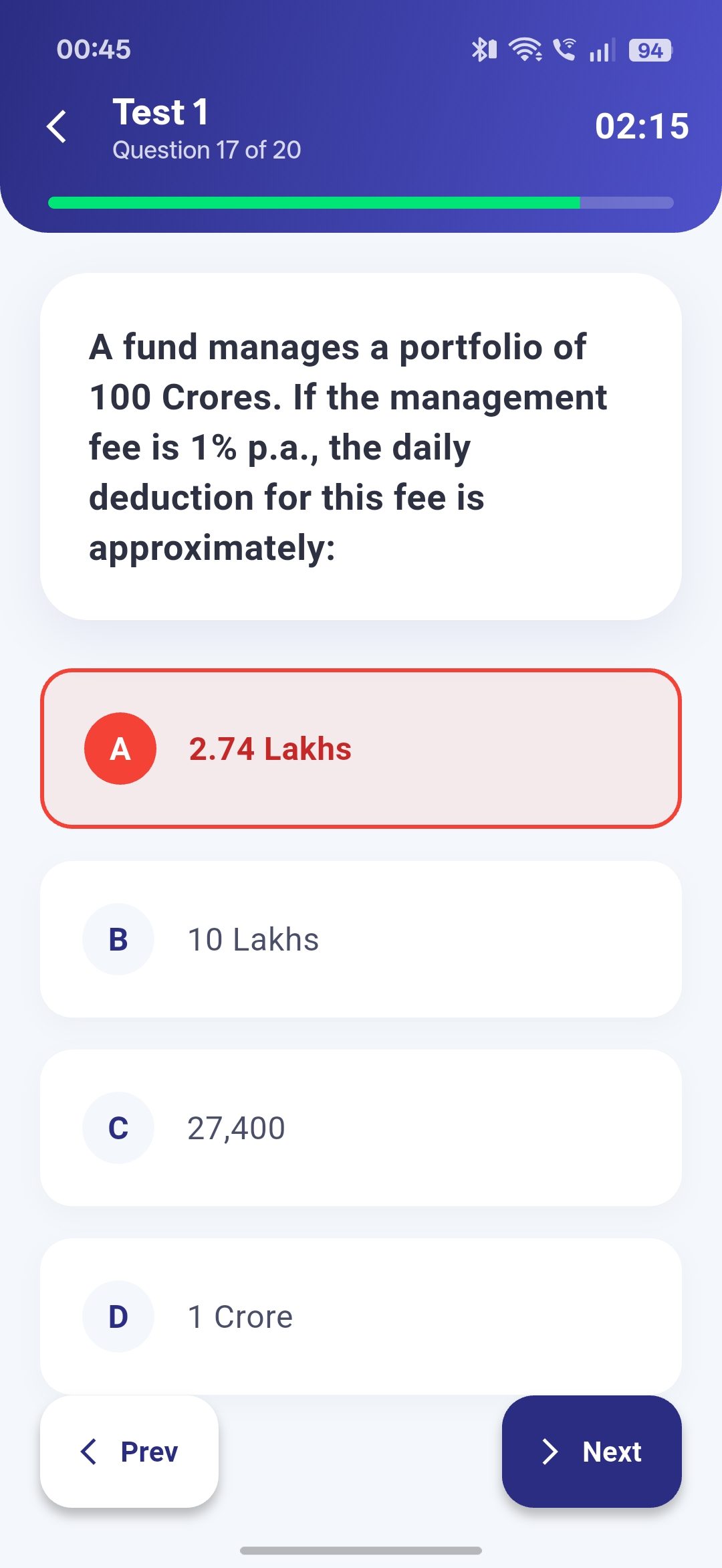
12:49 am
@caislife
https://conferenza.in/lectures/ca-final-p-db983599-33d6-4415-9dd8-ea16ff74a94b?ref=AB1E71B
IT IS A RECORDED BATCH OF 2025MARCH.
DO YOU HAVE ANY LIVE BATCH
3:27 pm
@gvh
where is law mcq
2:27 pm
?
2:27 pm
@mer
where is accounting standards questions
10:55 am